 TradeBB
How to pass a prop firm challenge: do the math before you trade

To pass a prop firm challenge, you need to reach the profit target without hitting a loss limit, inside the time allowed. Most advice stops at "manage your risk." This guide turns that into numbers, using the one thing you already have: your own trading history.
You'll work out three things before you place a trade: how much to risk per trade, how many losses in a row the rules can take, and how many days the target will take at your normal pace. Sometimes those answers don't fit together. That's worth knowing before you pay.
If you're new to how challenges are structured, or want the published pass rates, start with prop firm challenges, explained.
Step 1: Write down the rules and your three numbers
From the challenge rules, you need four numbers. We'll use an example account. These are illustrative numbers, not any firm's rules; swap in your own.
| Rule | Example |
|---|---|
| Account size | $50,000 |
| Profit target | $3,000 |
| Daily loss limit | $1,000 |
| Maximum loss | $2,000 |
| Time limit | 30 trading days |
If your firm states limits as a percentage, convert them to dollars for your account size first. If its maximum loss trails your highs, your room shrinks as you make money; see trailing drawdown before you go further.
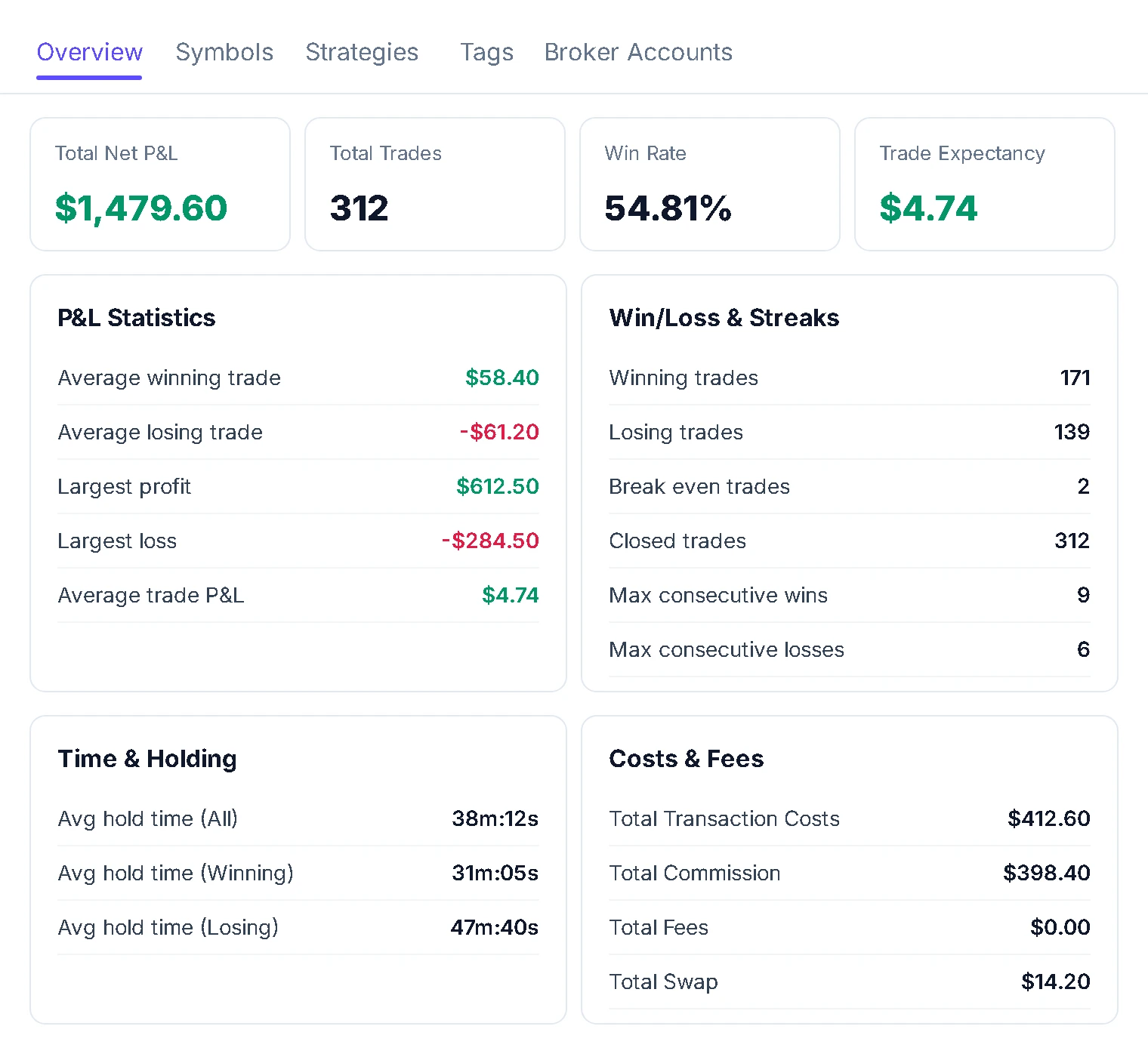
From your own trading history, you need three numbers:
- Your longest losing streak — the most losing trades you've had in a row
- Your average losing trade — what a loss actually cost you, not what your stop was meant to cost
- Your average day — net profit or loss per trading day, after costs
Step 2: Size each trade from your real losses
Say you plan to risk $250 a trade. Look at your average losing trade. If it's $310, your losses run about 24% bigger than planned: slippage, late exits, a stop moved once or twice. Plan with the number you actually lose, not the one you intend to.
Here's what each planned risk turns into, and which loss in a row would hit each limit in the example account:
| Planned risk per trade | Real average loss (24% bigger) | Hits the $1,000 daily limit on loss… | Hits the $2,000 maximum loss on loss… |
|---|---|---|---|
| $100 | $124 | 9th in a row | 17th in a row |
| $150 | $186 | 6th | 11th |
| $200 | $248 | 5th | 9th |
| $250 | $310 | 4th | 7th |
Touching a limit ends the account, so these are the losses that would end it, not the number you can afford.
Now compare with your longest losing streak. If it's six, a $150 plan would breach the daily limit on exactly that streak, so it's too big. At $100, you could take two more losses after your worst streak so far; the third would hit the line.
Find out why your losses run bigger. In TradeBB, filter your trades by realized R-multiple, for example losses worse than −1R, and see which days and setups they come from. That gap between planned and realized is covered in more detail in risk reward ratio.
Step 3: Set your own daily stop, before the firm's
The firm stops you at $1,000. Stop yourself earlier: at the firm's limit minus one real loss, so the next trade can't carry you over.
With a $100 plan and $124 real losses: $1,000 − $124 = $876. Round it down and stop for the day at $850 down.
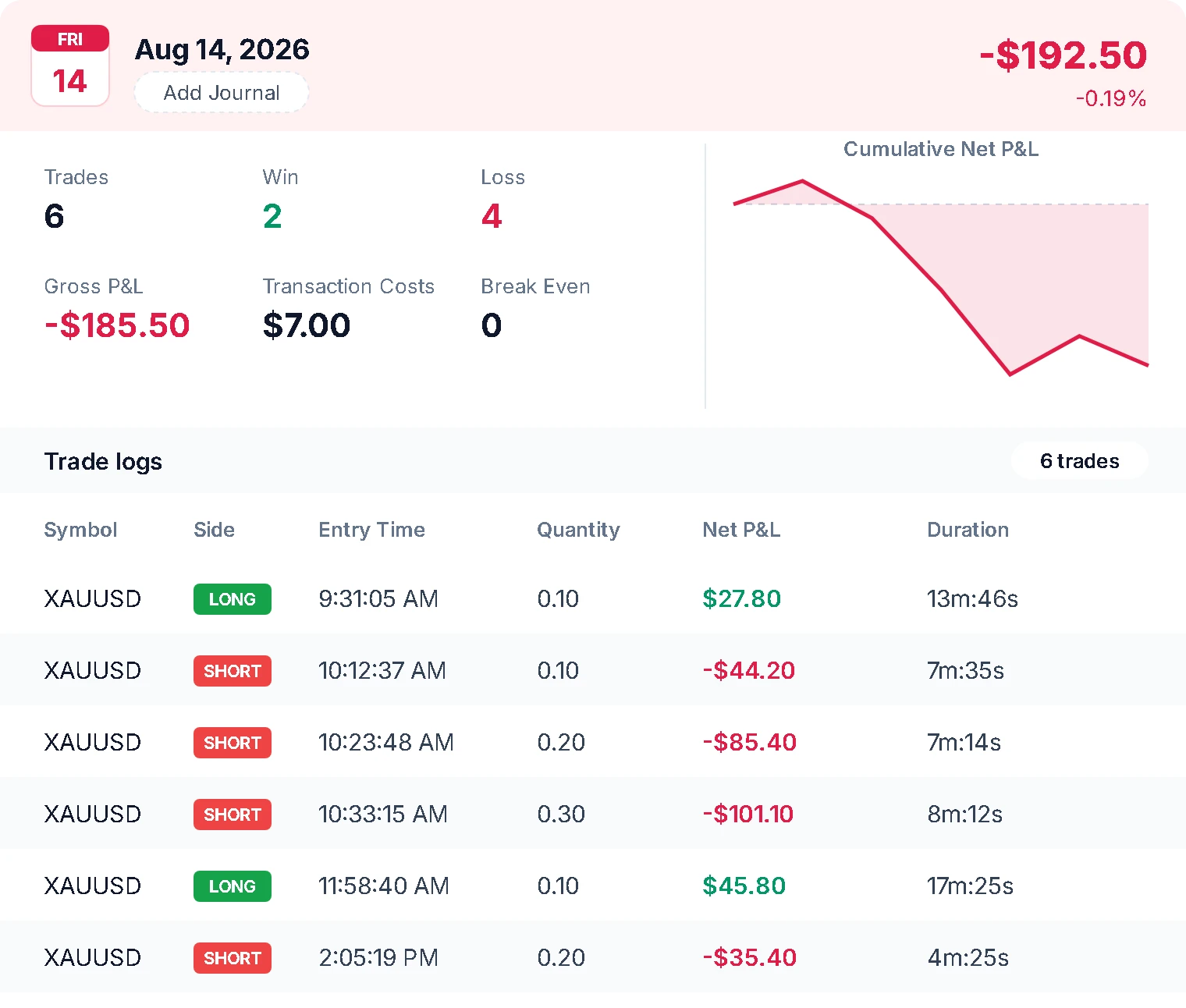
Write it down before the session. TradeBB won't stop you, but the calendar will show you afterwards which days went past it, and the Daily Journal card lists the trades from those days. Most of them start with the trade after a loss.
Step 4: Work out how many days the target will take
Divide the profit target by your average day.
Say that at $250 a trade, your average day nets $150. At $3,000, that's 20 trading days, inside the 30-day limit.
But Step 2 said $250 was too big. If you keep the same trades and cut risk to $100, your results shrink with it: your average day becomes about $60, and the target takes 50 trading days. That's well past the limit. You wouldn't breach; you'd run out of time.
This is the trade-off most guides skip. A smaller size keeps you inside the loss limits and makes the target take longer. If no size satisfies both, the honest answer is that this challenge doesn't fit your trading yet. Look for rules with a longer or no time limit, or work on your average day first. The two ways to fail, breaching and running out, are explained in prop firm challenges, explained.
A consistency rule can stretch this further: if one big day carries too much of your profit, some firms raise your target or delay a payout. See the consistency rule.
Use net numbers. An average day before commissions makes the target look closer than it is.
Step 5: Review as you go
Once you're trading the challenge, check three things at the end of each week:
- Days past your own stop — open the calendar, then the Daily Journal card for each one
- Losses bigger than planned — filter by realized R-multiple; if they're creeping up, so is the chance of hitting the limits from Step 2
- Your pace — total progress against the target, compared with the days left
Tag what you find, like a moved stop or an extra trade after a loss, and the Tags report shows what each habit costs over the whole attempt. That's what a prop firm trading journal is for: your numbers, per account, before and during the challenge.
Work out your numbers from your own trades — Start Your Prop Journal →
Frequently asked questions
At your normal pace: divide the profit target by your average net day. Firms set different minimum days and time limits, so check both against that number before you start.
At your normal pace: divide the profit target by your average net day. Firms set different minimum days and time limits, so check both against that number before you start.
Going faster means risking more per trade, and Step 2 sets how much you can risk before a normal losing streak ends the account. If the target needs more speed than that allows, a faster attempt is a riskier one.
Going faster means risking more per trade, and Step 2 sets how much you can risk before a normal losing streak ends the account. If the target needs more speed than that allows, a faster attempt is a riskier one.
An amount where your longest losing streak, at your real average loss, stays clear of the daily limit, with room to spare.
An amount where your longest losing streak, at your real average loss, stays clear of the daily limit, with room to spare.
That depends on the firm: some have a second phase, others move you to a funded account with its own rules. The rules often change between stages, so redo the math with the new numbers.
That depends on the firm: some have a second phase, others move you to a funded account with its own rules. The rules often change between stages, so redo the math with the new numbers.
No. Nothing does. What your history can show is which rule you'd be most likely to break and how long the target would take, before you pay to find out.
No. Nothing does. What your history can show is which rule you'd be most likely to break and how long the target would take, before you pay to find out.
Do the math on your own trades. Then decide if this challenge fits.
Bring in your trades and get your longest losing streak, your real average loss and your average day, per account.